.png)


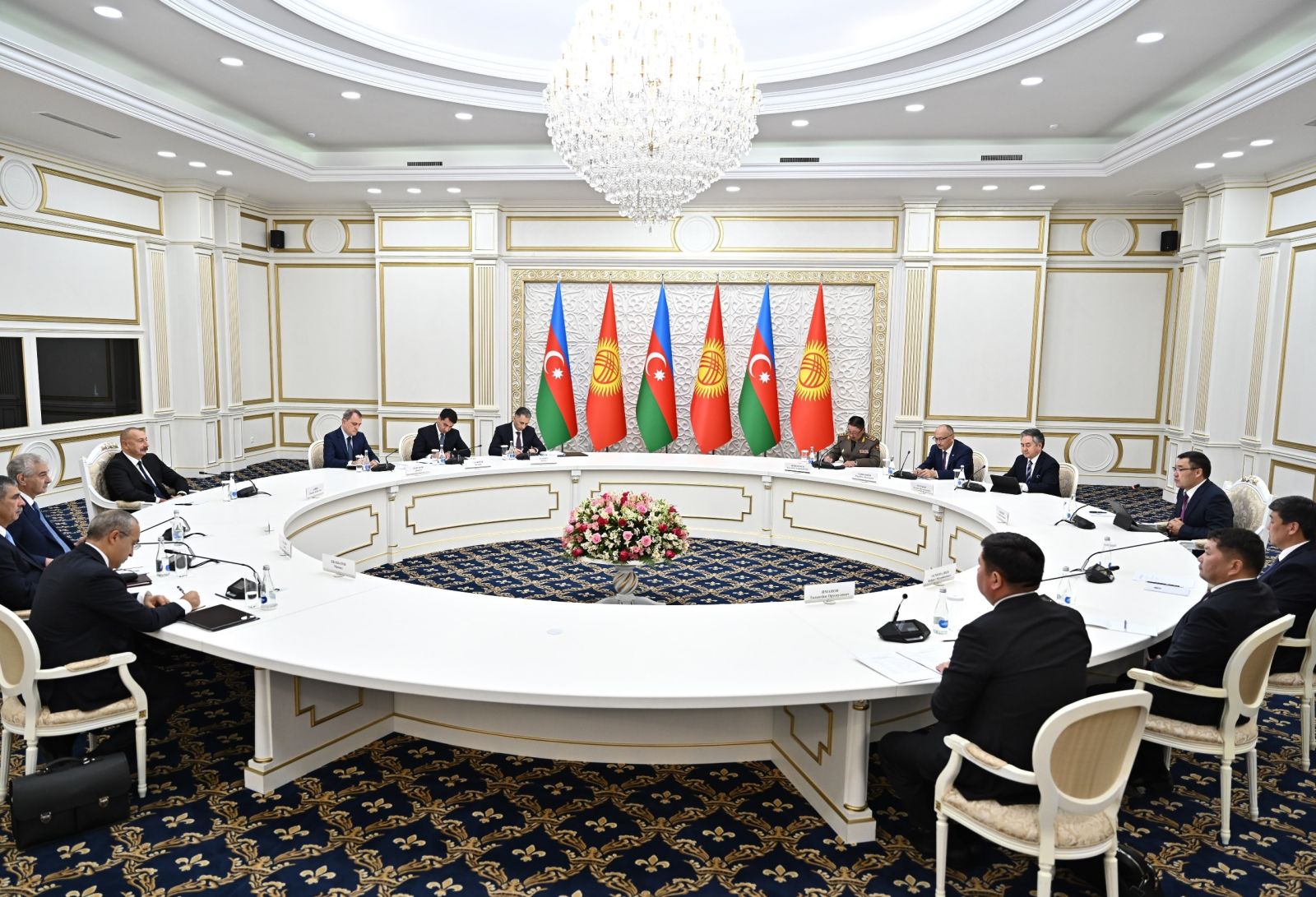
The 25th anniversary summit of the Shanghai Cooperation Organization held in Bishkek became an important political platform from the perspective of Azerbaijan’s foreign policy agenda. President of Azerbaijan Ilham Aliyev’s participation in the SCO meeting held in the “SCO Plus” format once again demonstrated Azerbaijan’s active role in various political, economic and security processes across Eurasia.
However, the significance of President Ilham Aliyev’s visit to Bishkek was not limited to the summit hall. The bilateral meetings held as part of the visit demonstrated that Azerbaijan is continuing political dialogue simultaneously in several important regional directions. Although the contacts with the leaders of Türkiye, Iran, Kazakhstan and Armenia covered substantially different agendas, each of them reflects a distinct and important dimension of Azerbaijan’s regional policy.
Speaking to International Radio in an interview on the subject, Member of Parliament Nagif Hamzayev said: “In this regard, the Shanghai Cooperation Organization summit has become not only a multilateral platform but also a testing ground for bilateral relations. Undoubtedly, the most closely watched event of the day was the meeting with Prime Minister Nikol Pashinyan. The sides particularly emphasized the joint declaration signed in Washington on August 8, 2025, as well as the initialling of the agreed text of the peace agreement. This means that the process has not remained merely on paper; it is being supported by direct contact between the leaders."
The role of a third party as a neutral ground is important for Baku, both in terms of sending a signal to domestic and international audiences that negotiations are continuing. The meeting with President Tokayev was more symbolic and diplomatic in nature. The President congratulated Kazakhstan on its upcoming parliamentary elections and once again reaffirmed the continuity of the strategic partnership.
Nevertheless, these protocol-level meetings today helped shape the institutional memory of the allied relations. The meeting with Iranian President Pezeshkian, meanwhile, took place in a more challenging context. Against the backdrop of tensions in the region, Baku once again stated its support for peace and the path of negotiations. Although this was a formal statement of position at the diplomatic level, maintaining an open channel with Tehran is of strategic importance for Azerbaijan. This is particularly significant in the context of border security and transportation corridors.
Thus, the bilateral meetings held during the visit once again highlighted the multifaceted nature of Azerbaijan’s regional diplomacy and the country’s growing geopolitical weight. The overall picture of the diplomatic contacts in Bishkek shows that, amid a changing international relations system, Azerbaijan is not merely a state observing ongoing processes, but a country pursuing an active political course based on its national interests and regional priorities.